Scorched Earth
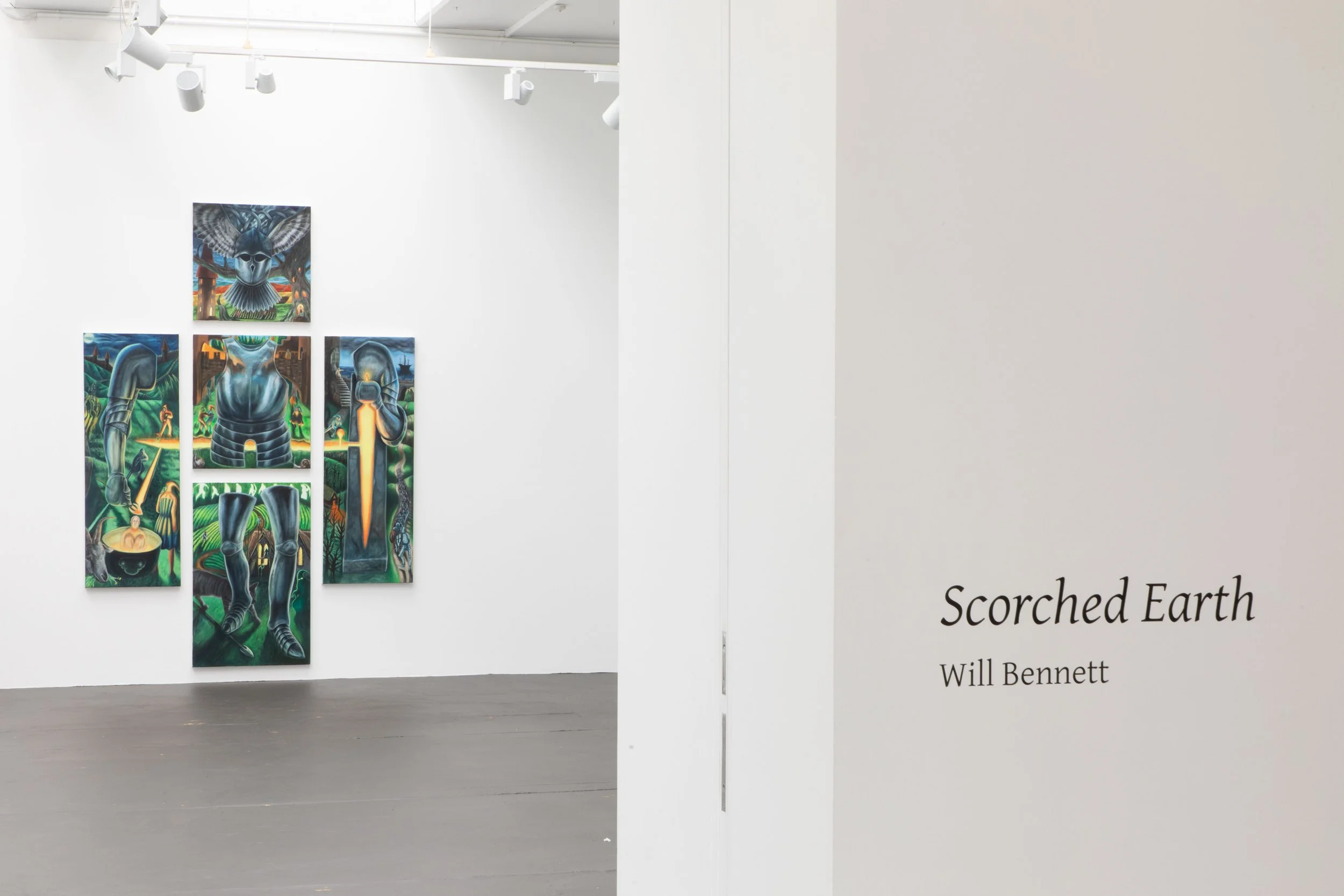
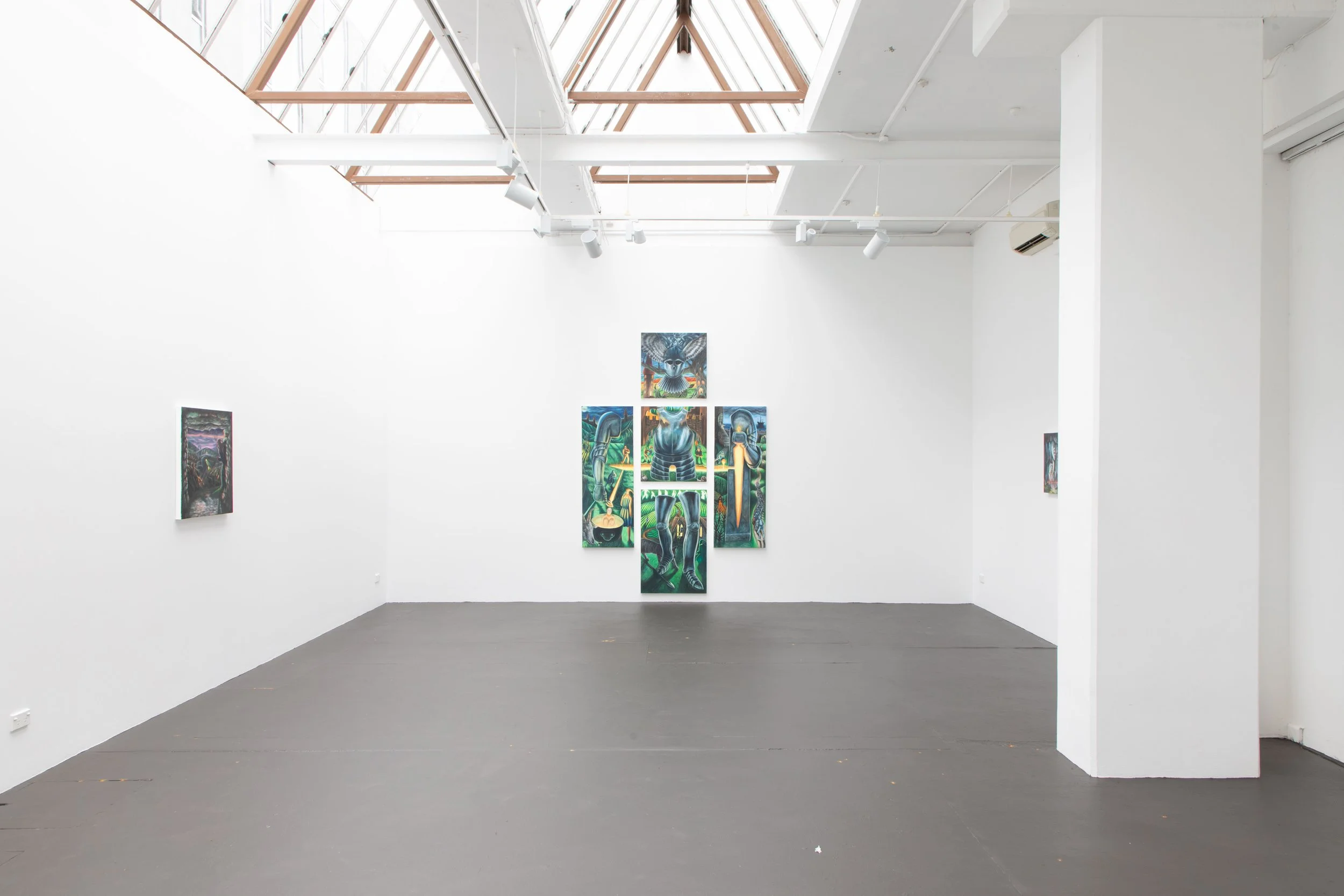
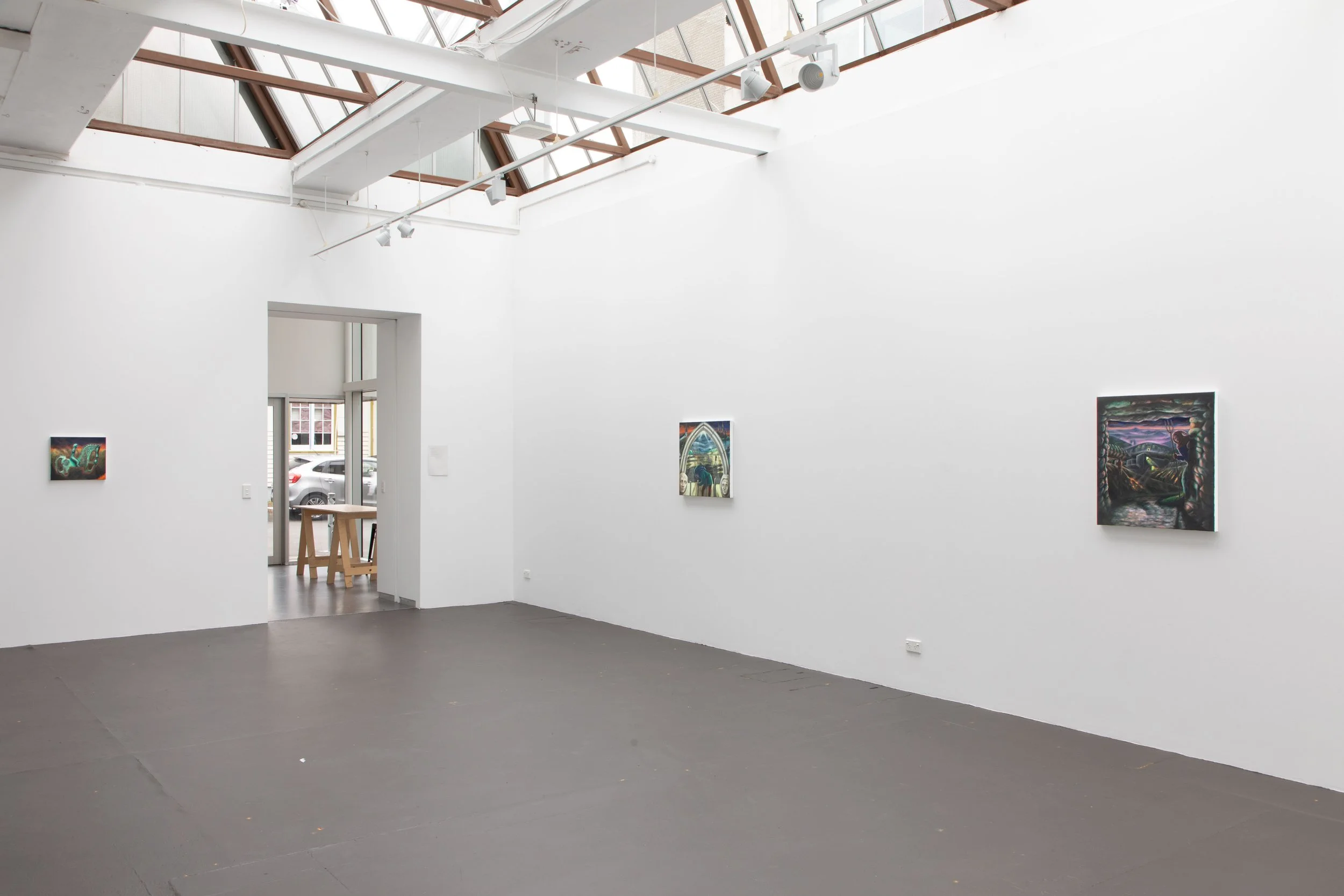
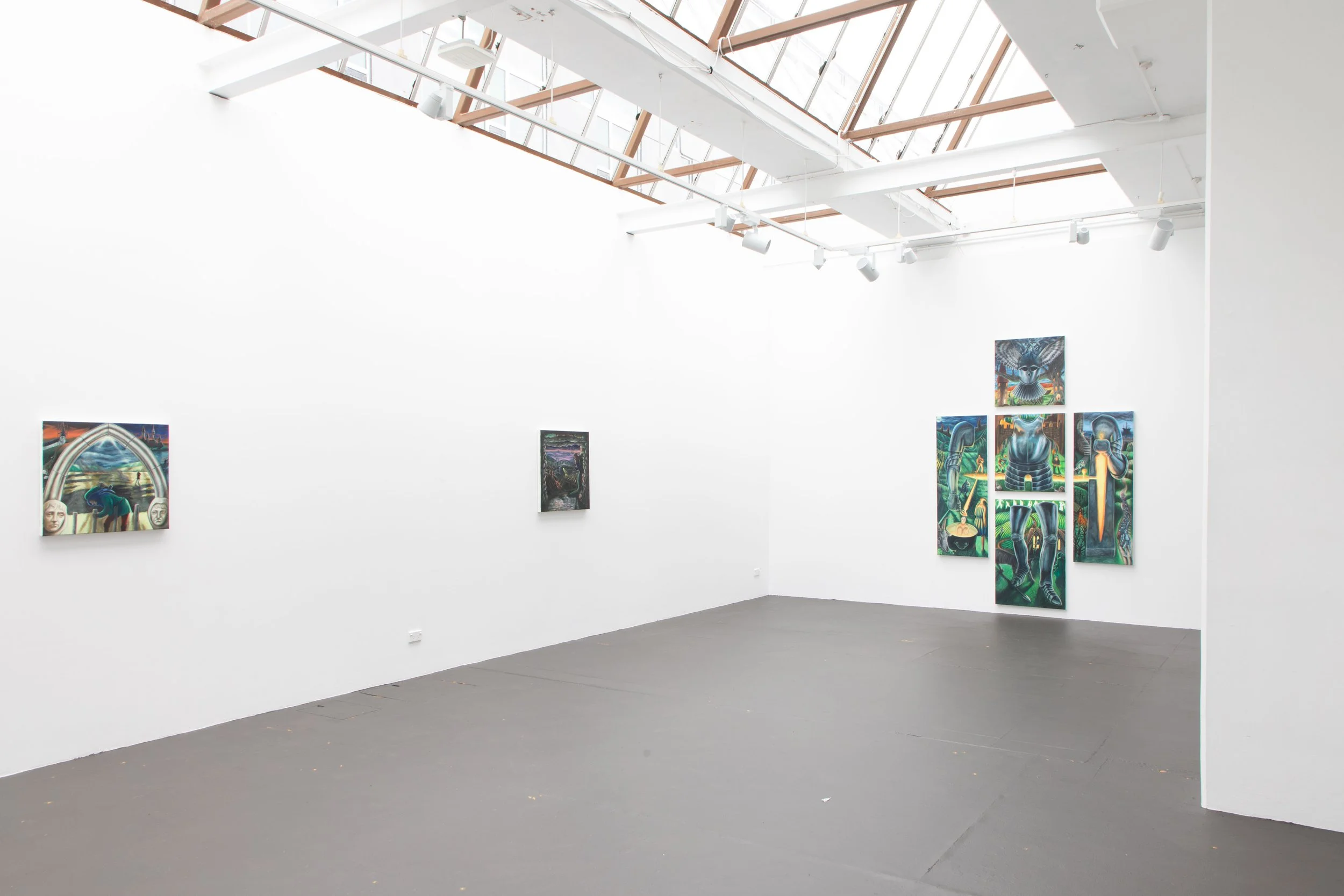
Scorched Earth
Lovingly written by Holly Walker for Will Bennett
The Middle Ages, or Medieval period in Europe, lasted roughly 1000 years, from 476 A.D - 1450.[1] In many parts of Europe, rigid hierarchies existed comprising kings, nobles, knights and peasants. Greed for ownership and the control of land and people led to feudalism, overt influence of the Church, plagues, and the Hundred Years’ War.[2] In that era Europe was composed of largely agricultural societies, some of whom endured to protest the colonisation of their native lands. Many others left, fled, escaped, journeyed, explored from isle to this Island.
In contemporary Aotearoa, Ikea plants pine forests like a contagious virus on our already exploited lands. Our government continues to cut taxes for the obscenely rich, and too many cannot afford a “Marmite sandwich and an apple in a bag”.[3] Our queer whānau protest to DEFY DESTINY as corrupt, colonised organisations exemplify disorder through oppressive violence. Many are left with their lives changed for the worse due to long COVID complications without additional support or answers from our broken medical system; not to mention the viral plagues of burnout and the loneliness epidemic as wars multiply, the wars everywhere.
What are we in the midst of now? Between a fantasy or romanticisation of the so-called ‘Old World’ that distance affords us alongside dystopian apocalyptic predictions or in turn the possibility of a truly incredible, intersectional, equitable, and sovereign future that we most likely won't live to experience (at least in our current embodied existence)?
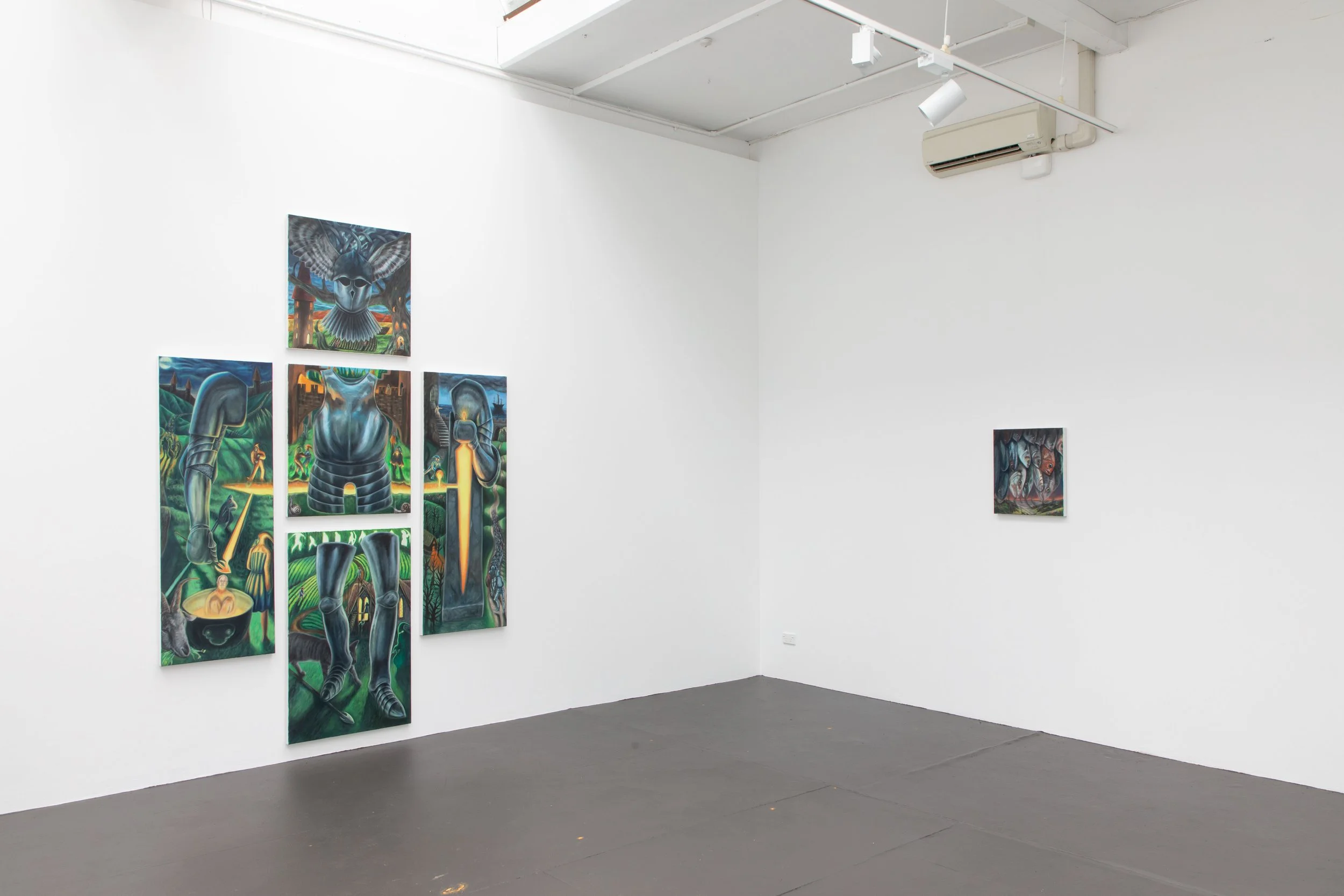
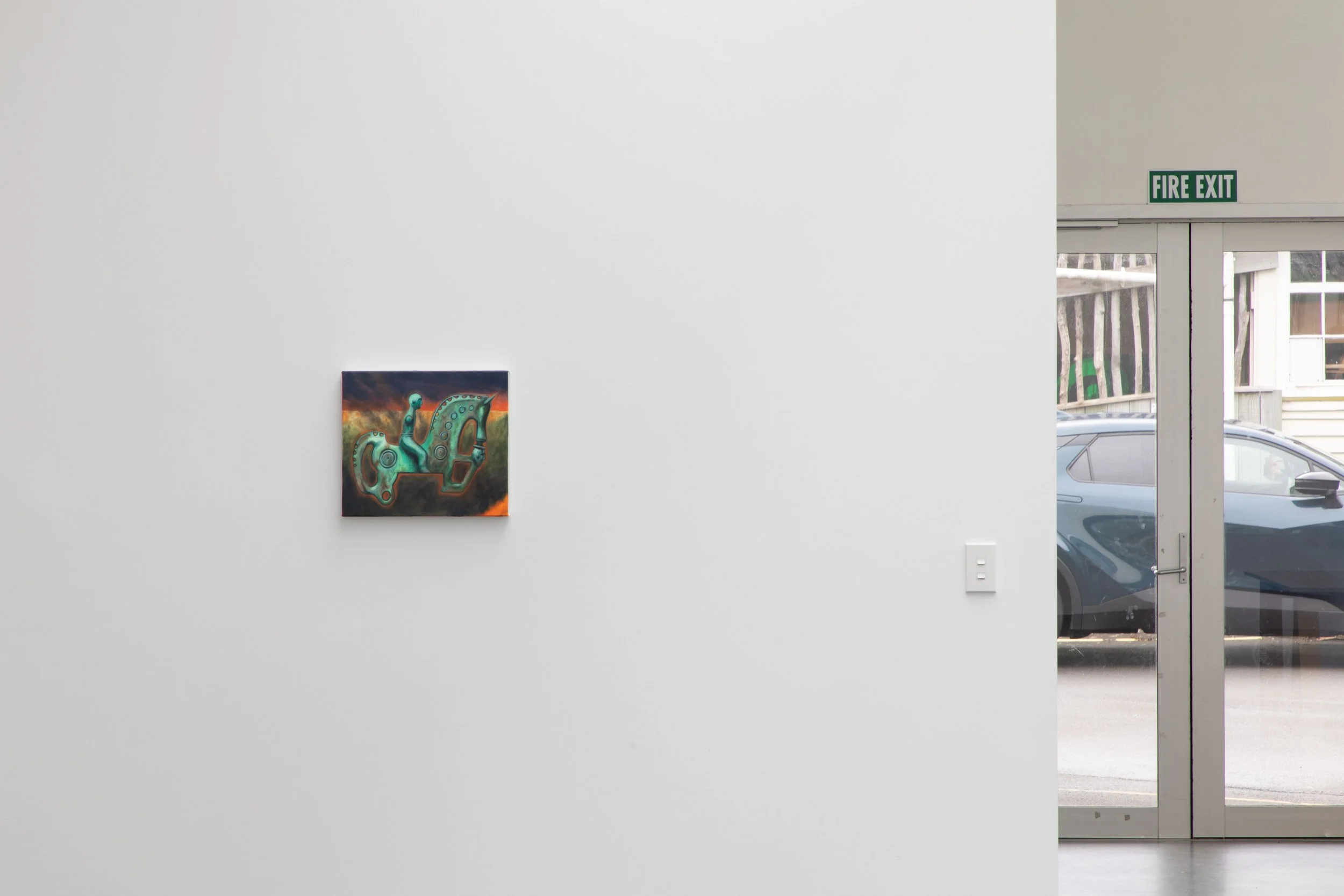
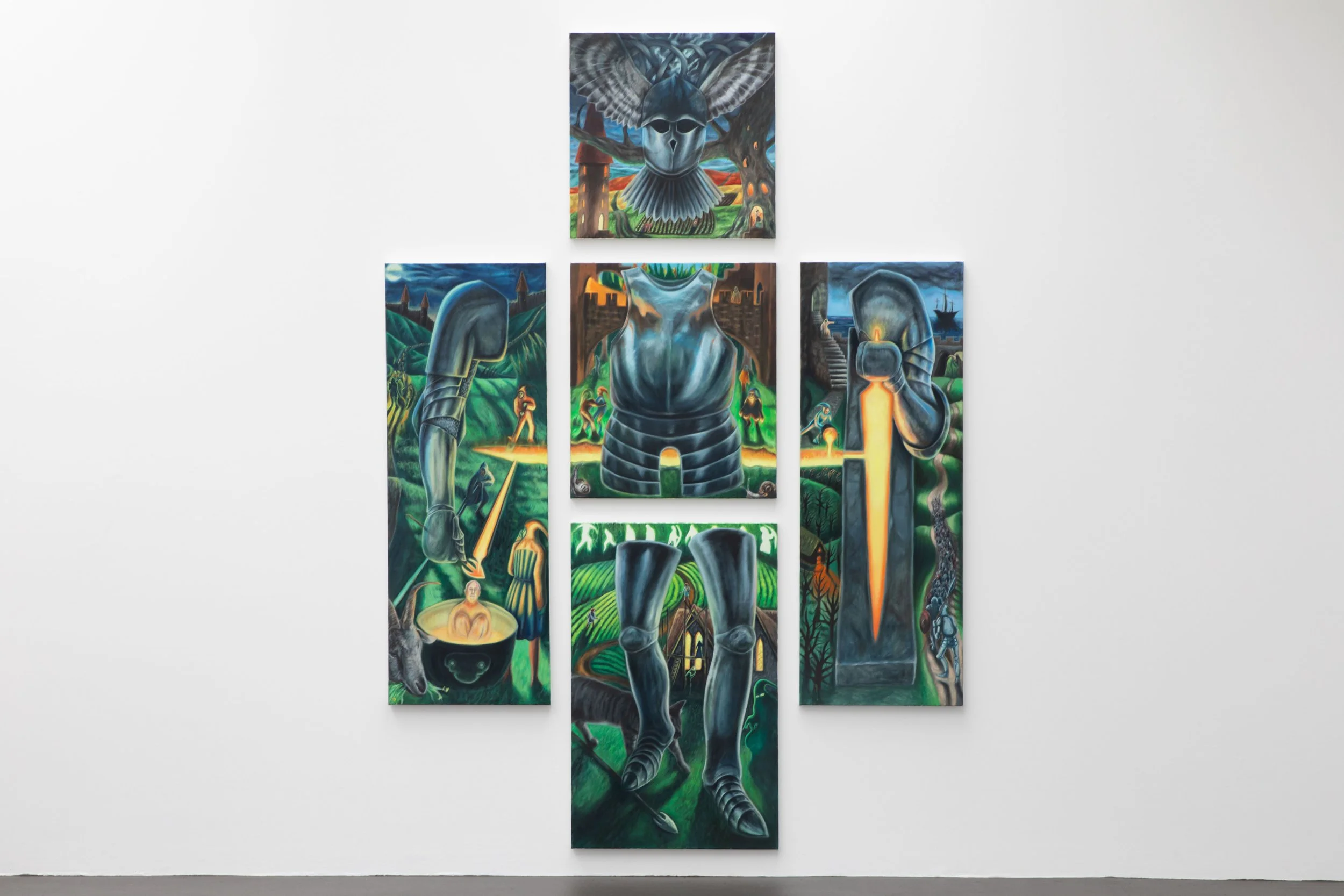
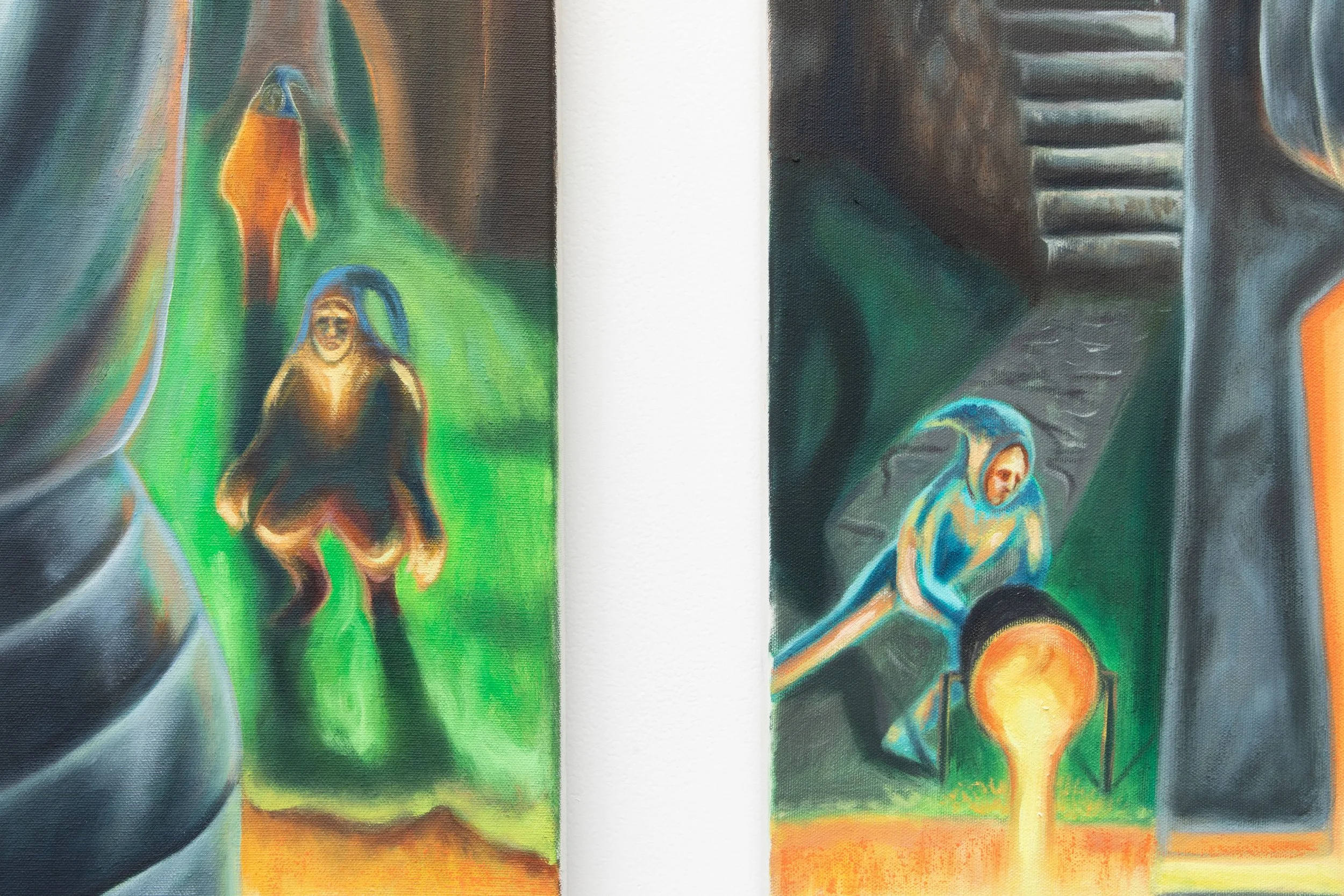
Since sitting with Will and time travelling through his artworks, seeing the characters, buildings, animals, red skies, and undulating lands of his wide open mind and memory, I am again reminded of my own in-betweenness. There is the ongoing pinch of Pākehā in-betweenness; between ‘distant’ mother and ‘familiar’ other lands and the cultural phenomena that imbue Will’s art practice. Starting from the middle, Will’s artworks braid pieces together, strands drawn from past lives, and present ones still actively lived, and who knows, the future? And we are in-between.
Like a kutu, carrying our past blood and knotting itself into strands of hair at the end of an itchy head, I am looking at these paintings wondering: Why do I feel like I recognise that place?[iv] Maybe you are, finally! on some ancestral shit and the sounds of bagpipes play into your ears. You have never been to Scotland, but you are certain you have been to that Highland castle before… or actually taking a closer look, that’s the Sky Tower.
*I think Will Bennett is a witch*
Will has described how he struggles or resists putting words to these artworks, which makes sense, that’s why he paints. I hope we, (meaning predominantly White and predominantly associated with academia in this gallery) but also… a big wide ‘we’, have uncolonised enough to respect that the written word is not the most valuable or truthful representation of knowledge. Although I’m not so sure that these works are ‘know’-ledge at all, but rather an invitation into unknowing and imagination. Will is humble, like a door, and some understand that to name something, even more so as a White man, is to own it. Once named or explained it makes it difficult for magic to move through it. Magic is forced out by over explanation. Will understands such bewitchery.
Will exhibits an intuitive making process and what I regard as an innate trust. Trust enough to spend time in his multiple internal worlds, to materialise a memory or idea, (what's the difference anymore?) and trust to share with us. Many Pākehā develop a habit early in their lives, of assuming that there is no point in looking back because there is nothing there. Nothing is a very different place to the unknown. I understand Will’s practice, like many in the arts, is to act as a conduit, seeking and translating messages. Too often qualities of the mystical or spiritual are attributed to an oppressive binary reading of the feminine, thus read as less real, softened, lacking logic, grounding, or reason.
Do you realise that men and children were also murdered during the witch trials that occurred throughout Europe? Men were herbalists, astronomers, midwives, visionaries, political protesters identifying injustices; they were lovers and gardeners (the bees would argue those are one and the same). Sylvia Federici, author of Caliban and the Witch, describes how the European witch trials were not a byproduct of ignorance, but a targeted, capitalist class war intended to crush communal autonomy and women's sovereignty, with brutal efficacy.[v] Will’s artworks cast a long line highlighting the consistency and persistence of this Pākehā history. He connects the unnamed, generally unrecognised working class—many of whom stood in solidarity with those accused—to his own lifetime and life experiences, in the fields of the farms around Taranaki where he was born and bred—what a leap. The land of Taranaki is known for its rich and fertile soils. The volcanic ash Taranaki fed the whenua when he erupted, continues to help farmers feed people. The people who work the land have their heads closer to the ground.
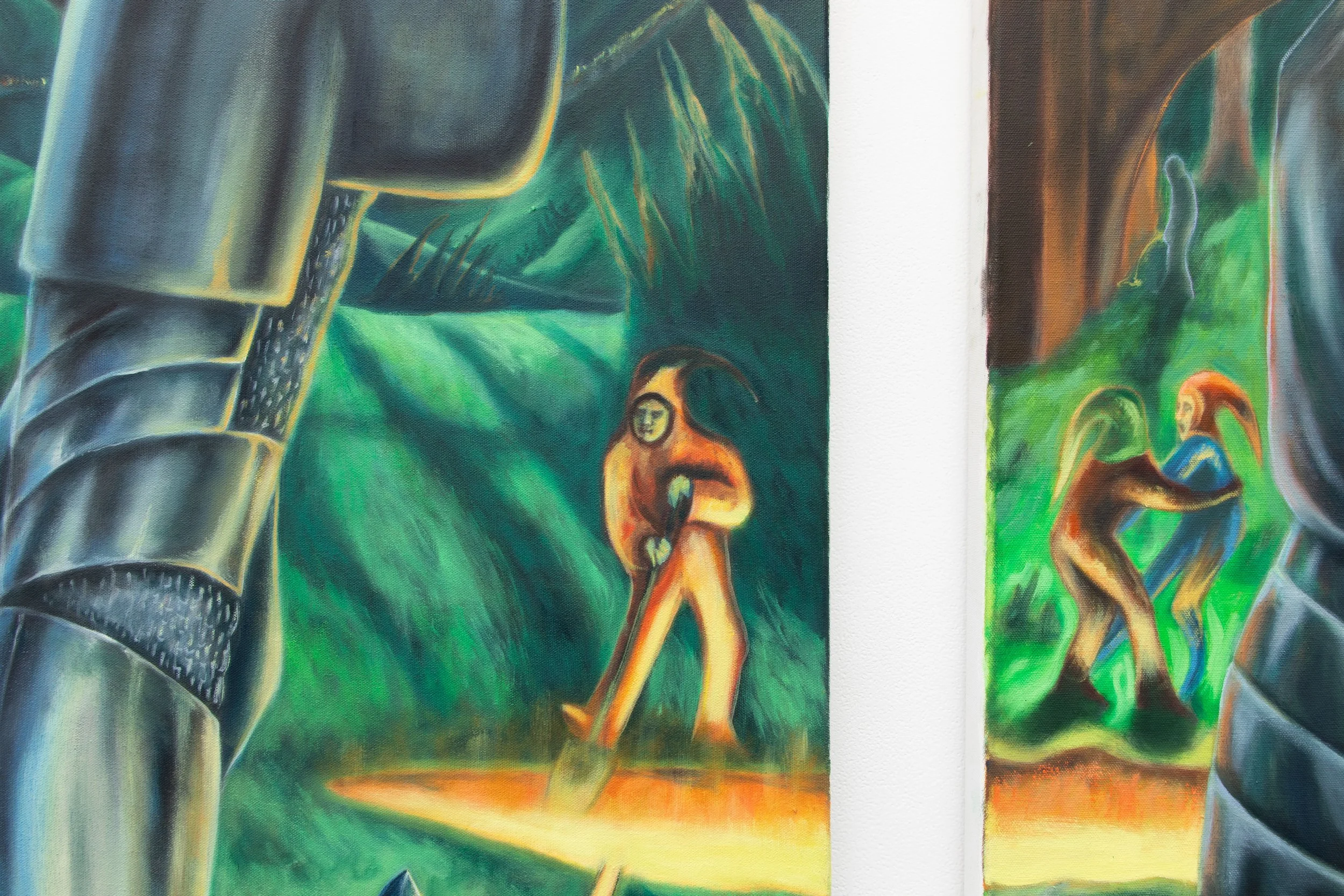
The figures inhabiting Will’s artworks enlist the glowing molten earth to help shape their tools that craft our world. Just as we shape the land, the land shapes us. Skies burn red over these lands, reflecting Taranaki’s internal timeless warmth. Blood still passes through the valves of a broken heart turned to stone. Is today dawn or dusk?
[1] Medieval Times. 2023. “Medieval Era.” Medieval Times Dinner & Tournament. 2023. https://www.medievaltimes.com/education/medieval-era
[2] “Medieval.” 2018. History Extra. 2018. https://www.historyextra.com/period/medieval/
[3] Direct quote from current Prime Minister Christopher Luxon. Reference: Shelling, Madeline. 2025. “Let Them Eat Marmite Sandwiches.” E-Tangata. March 15, 2025.
[4] Not a direct citation but certainly influenced by: Emily Rakete: in “In Human: Parasites, Posthumanism, and Papatūānuku.” n.d. Artspace Aotearoa https://artspaceaotearoa.nz/reading-room/in-human-parasites-posthumanism-and-papatuanuku
[5] Federici, Silvia. 2004. Caliban and the Witch: Women, the Body and Primitive Accumulation. New York: Autonomedia.